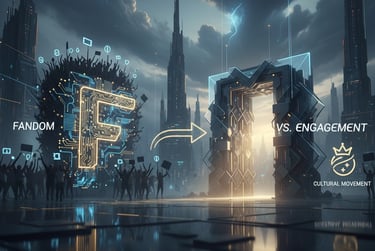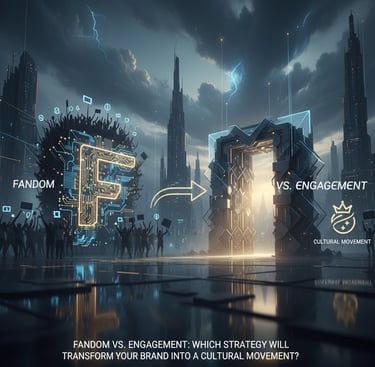
Fandom vs. Engagement: Which Strategy Will Transform Your Brand into a Cultural Movement?
The marketing landscape has reached a tipping point. Brands spending millions on traditional engagement strategies watch their carefully crafted campaigns disappear into the digital void, while others seem to effortlessly build movements that reshape entire industries. The difference? Understanding that engagement is just the starting line: fandom is where cultural transformation begins. At Beyond Reality, we've witnessed this shift firsthand. The brands that capture hearts and minds aren't just creating content; they're creating communities. They're not building audiences; they're building advocates. And they're not chasing metrics: they're crafting meaning. But here's the question every brand leader should ask: Are you building engagement, or are you building fandom? Because only one of these strategies has the power to transform your brand into a cultural movement.
Daniel Warwick
11/22/20256 min read


The marketing landscape has reached a tipping point. Brands spending millions on traditional engagement strategies watch their carefully crafted campaigns disappear into the digital void, while others seem to effortlessly build movements that reshape entire industries. The difference? Understanding that engagement is just the starting line: fandom is where cultural transformation begins.
At Beyond Reality, we've witnessed this shift firsthand. The brands that capture hearts and minds aren't just creating content; they're creating communities. They're not building audiences; they're building advocates. And they're not chasing metrics: they're crafting meaning.
But here's the question every brand leader should ask: Are you building engagement, or are you building fandom? Because only one of these strategies has the power to transform your brand into a cultural movement.
The Engagement Trap: Why Surface-Level Interactions Fall Short
Traditional engagement feels safe. It's measurable, predictable, and follows established playbooks. Clicks, likes, comments, email open rates: these metrics provide comfort in their familiarity. Most brands pour resources into driving these interactions, celebrating when their latest campaign generates impressive engagement numbers.
Yet engagement alone creates relationships built on transactions, not transformation. It asks people to interact with your brand but never truly invites them to become part of something bigger. Engagement strategies focus on what your audience can do for you: share your content, buy your products, amplify your message. This approach creates followers, not fans.
The fundamental limitation of engagement-focused strategies lies in their temporary nature. When the campaign ends, so does the connection. Without continuous stimulation through new content, promotions, or incentives, engagement drops off. You're constantly working to recapture attention rather than sustaining it through genuine connection.
Fandom: The Engine of Cultural Movements
Fandom operates on an entirely different frequency. Where engagement seeks interaction, fandom creates identity. Where engagement builds audiences, fandom builds communities. Where engagement generates metrics, fandom generates movements.
True brand fandom transforms customers into co-creators of culture. When someone becomes a fan of your brand, they don't just use your products: they integrate your brand into their personal story. They don't just follow your content: they create their own. They don't just recommend you to friends: they evangelize your mission.
The most compelling aspect of fandom is its self-perpetuating nature. Fans don't need constant brand stimulation to maintain their connection. They sustain their own enthusiasm through community interaction, content creation, and values alignment. Research shows that 87% of fans actively participate in fandom-related activities, while 42% create original content: a rate that jumps to 50% among Gen Z.
This organic participation transforms your brand from a company that sells products into a platform that enables expression, connection, and belonging. Fans see your brand as an extension of themselves, making their relationship with you resilient against competitive pressure and market fluctuations.
The Four Pillars That Separate Fandom From Engagement
Emotional Investment Over Transactional Exchange
Engagement strategies often rely on external motivators: discounts, exclusive access, reward programs. These approaches work in the short term but fail to create lasting emotional bonds. Fandom, by contrast, builds on internal motivators: shared values, personal identity, and emotional resonance.
When Patagonia takes a political stance on environmental issues, they're not just creating content: they're giving their community a cause to rally around. Their customers don't just buy outdoor gear; they join a movement for environmental responsibility. This emotional investment means Patagonia fans remain loyal even when competitors offer lower prices or newer technologies.
Community Building Over Audience Accumulation
Traditional engagement treats audiences as collections of individuals to be reached. Fandom understands that the most powerful connections happen between community members themselves, not just between the brand and its followers.
LEGO exemplifies this approach by creating platforms where fans connect with each other, share their creations, and collaborate on projects. The brand becomes the catalyst for relationships between fans, not just the centre of attention. This community-centric approach creates networks that strengthen over time rather than requiring constant brand investment to maintain.
Co-Creation Over Content Consumption
Engagement strategies position audiences as consumers of brand-created content. Fandom invites audiences to become co-creators, contributing their own perspectives, creativity, and interpretations to the brand story.
The most successful fandoms encourage user-generated content not as a marketing tactic, but as a core part of their value proposition. When fans create content, they're not just engaging with your brand: they're expanding it, adding new dimensions and meanings that you could never develop internally.
Values Alignment Over Feature Promotion
While engagement-focused marketing emphasises product features and benefits, fandom marketing centres on shared beliefs and principles. Fans connect with what your brand stands for, not just what it sells.
Nike's success in building fandom comes from their consistent messaging around personal achievement, breaking barriers, and pushing limits. Their fans don't just wear Nike products; they embrace the mindset that Nike represents. This values-based connection creates relationships that transcend product categories and market segments.
The Cultural Movement Blueprint
Transforming from engagement to fandom requires a fundamental shift in how you approach brand building. Cultural movements don't happen by accident: they emerge from deliberate choices that prioritise long-term community building over short-term metric optimisation.
Start With Authentic Purpose
Every cultural movement begins with an authentic purpose that extends beyond profit. Your brand must stand for something meaningful that resonates with your audience's own values and aspirations. This purpose becomes the foundation for everything else: your content, your community guidelines, your business decisions.
Create Space for Participation
Fandom requires active participation, not passive consumption. Build platforms, initiatives, and opportunities that invite your community to contribute their own creativity and perspective. Whether through user-generated content campaigns, community forums, or collaborative projects, give your fans ways to shape your brand's evolution.
Celebrate Your Community
Shift your content strategy to celebrate your community as much as your products. Highlight fan creations, share community stories, and make your fans the heroes of your narrative. This approach reinforces that your brand exists to serve something bigger than itself.
Maintain Consistency in Values
Cultural movements require unwavering consistency in values and principles. Every decision, from product development to social media responses, must align with the beliefs that define your community. This consistency builds trust and gives your fans confidence in advocating for your brand.
The Beyond Reality Perspective
Through our work with innovative brands across industries, we've learned that the most successful cultural movements combine authentic storytelling with immersive experiences that bring communities together. The brands that transcend their categories understand that fandom isn't built through advertising: it's built through experience.
Whether we're creating immersive brand activations or developing narrative-driven content, our approach centres on fostering genuine connections between brands and their communities. We've seen how the right experience can transform casual customers into passionate advocates who drive cultural conversations.
Making the Strategic Choice
The choice between engagement and fandom isn't just about marketing tactics: it's about your brand's fundamental identity and long-term potential. Engagement may deliver immediate results, but fandom delivers cultural influence that compounds over time.
Brands building fandoms enjoy higher lifetime customer value, reduced acquisition costs through organic word-of-mouth, and resilience against competitive pressure. More importantly, they create a lasting impact that extends far beyond their immediate business objectives.
As consumer expectations continue evolving, particularly among younger generations who seek authentic connection over traditional advertising, the brands that master fandom will shape the cultural landscape. They'll become essential parts of their customers' identities rather than optional parts of their shopping lists.
The question isn't whether your brand needs to build fandom: it's whether you're ready to commit to the authentic relationships and consistent values that make fandom possible. Because in a world where everyone is fighting for attention, the brands that win will be the ones that create belonging.
Ready to transform your brand from engagement to fandom? Let's collaborate on creating the experiences that build cultural movements.